
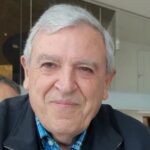
Jordi MOLGO
Gif sur Yvette, ESSONNE, FR
Research Projects
Jordi Molgó was born in France in 1946, obtained a D.D.S., degree at the University of Chile (1969), and completed a residency of one year in Stomatology at the Jimenez-Diaz Foundation (Madrid). Awarded in 1973 with a fellowship of the French government to do research work at the National Centre for Scientific Research (CNRS) in Gif sur Yvette he obtained Ph.D. degree from the University of Paris XI, Orsay Centre (1975). The CNRS appointed him in 1979, at the Institute of Pharmacology, Faculty of Medicine in Paris. Jordi carried out postdoctoral research (2 years) at the Department of Pharmacology of the University of Lund. He obtained in 1983 the highest degree of Doctor of Science (Sc.D.) from the Pierre-and-Marie-Curie University (Paris VI), with honors. In 1984, Jordi was invited to join the Laboratory of Cellular Neurobiology of the CNRS in Gif sur Yvette. In 1994, he joined the laboratory of Cellular and Molecular Neurobiology of the CNRS and became team leader of a small research group. In 1999, he was nominated Director of Research by the CNRS and head of the department Ion Transfers, and pharmacology of the neuromuscular system, position he maintained during 3 consecutive periods of 4 years each, until his compulsory retirement in 2014. Jordi was awarded by the CNRS with the position of Emeritus Director of Research and now is starting his last term. He exerts his activities at the Fundamental Research Division of the CEA, in the Life Sciences Frédéric Joliot Institute, Healthcare Technologies Department, and the Molecular Engineering of Proteins for Health Unit (EMR CNRS n° 9004), and continues deciphering the mode of action of invertebrate and emergent marine neurotoxins. He and co-workers made important contributions to the ciguatoxin (CTX) field by showing that through an action on voltage gated Na+ channels Pacific- and Caribbean-CTXs enhance acetylcholine release; activate the Na+/Ca2+ exchanger in reversed mode in synaptosomes; increase IP3 levels in excitable cells; mobilize intracellular Ca2+, increase the volume of Ranvier nodes, perisynaptic Schwann cells and nerve terminals in situ; block the endocytosis and recycling of synaptic vesicles; block K+ channels in skeletal muscle. Also, the mode of action of gambierol action on excitability and on a transient K+ current and in the excitation-contraction and excitation-secretion coupling processes were decoded. In addition, Jordi with co-workers have deciphered the molecular mode of action of gymnodimines, spirolides, pinnatoxins, and prorocentrolide-A produced by Karenia selliformis, Alexandrium ostenfeldii/A.peruvianum, Vulcanodinium rugosum, and Prorocentrum lima dinoflagellates, respectively. These cyclic imine toxins target the nicotinic acetylcholine receptors of the central and peripheral nervous system of vertebrates including humans with high affinity. Jordi was elected member of the scientific council of the French Biological Society (2002), and was associated secretary for a 4-year term. He was vice-president of the French Society of Toxinology (SFET) for two consecutive periods of 4 years, and now serves as secretary of the European section of the International Society of Toxinology. Jordi is the author of more than 277 international scientific publications, 154 extended abstract and short publications, and 79 book-chapters on matters pertaining toxinology, pharmacology, and physiology. His publications with 654 co-authors had a good international audience and impact, as evidenced by the 15, 505 citations reported in Research gate® (h index = 60 index). He has participated in the organization of national and international meeting related to ciguatera, biotoxins, fish poisoning, and marine toxins, and has been guest Editor of several special issues of Toxicon that were widely read and gave him an international reputation. Jordi and his team have been implicated in collaboration programs with the USA (sponsored by NIH), with UK, Sweden, Spain, Slovenia, Tunisia and Chile permitting fructuous exchanges of students and researchers. From the 23 PhD students that started their research work in Jordi’s laboratory most of them have important research positions in France and abroad (Australia, USA, Chile, and Vietnam).
Affiliation:
CEA