2025 Maureen Keller Student Awards
Francesca Cucchi (Best Oral Presentation)

I am a PhD candidate at Atlantic Technological University and the Marine Institute (Ireland). My research integrates traditional monitoring of Alexandrium and paralytic shellfish toxins with molecular tools. At ICHA2025, I presented the first transcriptomic profiling of Alexandrium from Irish waters to identify genetic pathways linked to toxin production, in collaboration with the University of Technology Sydney; co-authors include Amna Ashfaq, Amanda Curtin, Dave Clarke, Fiona Kavanagh, Patrick Costello, Francis Butler, Shauna Murray, Greta Gaiani, and Luca Mirimin. My master’s thesis at the University of Trieste (Italy), supervised by Aurelia Tubaro, examined palytoxin effects on marine zooplankton. I then completed a post-MSc Erasmus internship at IRTA (Spain) with Mònica Campàs and Greta Gaiani working on electrochemical biosensors targeting Garmbierdiscus/Fukuyoa, an internship at the Spanish Bank of Algae (Gran Canaria) on the CiguaRisk and NewTechAqua projects with Francesco Pisapia, and a research visit to FURG (Brazil) for the ASTRAL project with Luís Poersch.
Jaume Reverté (Best Oral Presentation)

Jaume Reverté is a PhD candidate at the Institute of Agrifood Research and Technology (IRTA) in Spain, under the supervision of Dr. Mònica Campàs, head of the Biosensors Group. He holds a bachelor’s degree in Biotechnology from Rovira i Virgili University and a master’s degree in Research in Molecular and Cellular Biology and Genetics from the University of València. His doctoral research focuses on developing next-generation biosensors and innovative bioanalytical tools for detecting and studying emerging marine toxins, including tetrodotoxins and ciguatoxins. During his doctoral thesis, he has participated in 6 national and international research projects, including transference initiatives to bring science closer to society. His work has resulted in 10 publications, with several more in progress, and contributions to 14 international conferences, earning 4 awards in recognition of his research on both toxins and biosensing. He aims to continue exploring the potential of bioanalytical tools for toxin analysis in the next stages of his career.
Karin Garefelt (Best Oral Presentation)

Karin Garefelt is a PhD candidate in biotechnology at KTH Royal Institute of Technology in Stockholm, Sweden, supervised by Professor Anders Andersson. She studies marine microbiomes in the seas around Sweden, combining high-throughput imaging with metagenomics to integrate and compare the different types of information. At ICHA 2025, she presented research on diel vertical migration using a vertically profiling Imaging FlowCytobot. Karin’s interest in environmental microbiomes began during an exchange year at Instituto Superior Técnico in Lisbon, Portugal, and deepened during her MSc thesis in Industrial and Environmental Biotechnology at KTH, completed in 2023. Earlier, she worked as a guide at the Swedish Museum of Natural History, an experience that nurtured her enthusiasm for communicating science. In the Andersson Lab, she now focuses on transforming large datasets into ecological insights about plankton communities.
Flavio Oliveira (Best Poster Presentation)
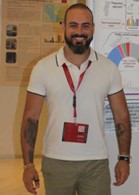
Flavio Oliveira is a PhD student in Marine Biotechnology and Aquaculture at the University of Porto (UP), affiliated with the Interdisciplinary Centre of Marine and Environmental Research (CIIMAR/CIMAR-LA). His doctoral research focuses on polyphasic taxonomy and lipidomic profiling of cyanobacterial strains from the Blue Biotechnology and Ecotoxicology Culture Collection (LEGE-CC), combining his interest in cyanobacterial diversity, taxonomy, and chemotaxonomy. Flavio is work integrates phylogenetic and lipidomic approaches to understand how evolutionary lineages shape metabolic traits in cyanobacteria, with applications in food, feed, and biotechnology. His research emphasizes fatty acid profiling and the identification of strains with nutritional potential, including omega-3 and omega-6 fatty acids. To ensure the safe biotechnological use of cyanobacteria, his work also includes screening for cyanotoxins and other bioactive metabolites. He has contributed to projects on cyanobacterial biodiversity, biosynthetic pathways, and strain characterization within the LEGE-CC. Ultimately, his research aims to uncover novel cyanobacterial resources with ecological and biotechnological relevance.